This section brings together all the evidence from the sources and applies the methods outlined earlier. Using secondary research, thematic grouping, and comparisons with global overtourism cases, the findings highlight how tourism pressures in Mazandaran are shaping land-use patterns, environmental strain, and long-term sustainability challenges.
1. Tourism Growth & Land-Use Change in Mazandaran
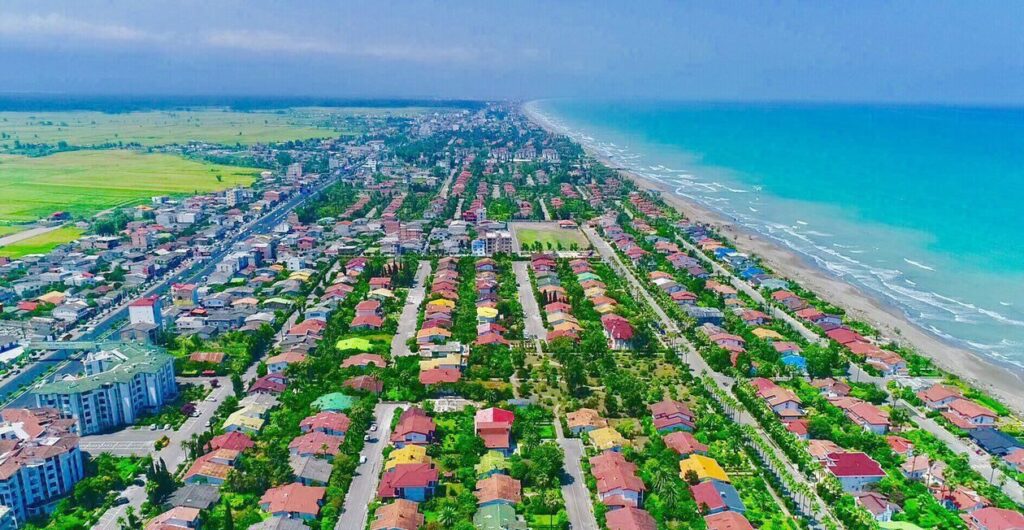
Mazandaran’s tourism boom has reshaped its landscape more aggressively than most Iranian provinces. Multiple studies point to rapid construction, especially along the coast and in urban tourism hubs.
Safarrad et al. (2021) found that built-up areas in Mazandaran’s tourism zones expanded by 708% between 1987 and 2019, compared to 248% in normal urban areas. This scale of land conversion is one of the clearest indicators of overwhelming tourism demand.
The same study noted that second homes now make up more than half of all housing stock in some districts. In global overtourism research, rapid second-home expansion is often considered an early warning sign of unsustainable tourism growth. It shows tourism infrastructure growing faster than local needs, often pushing residents out and altering community structure.
The University of Luxembourg (2024) described additional land-use pressures driven by tourism demand:
• farmers selling fields for villa construction
• clearing forest areas for second homes
• rising land prices pushing locals into peripheral zones
• weakening of traditional language and cultural life
• stronger flood and drought impacts linked to ecological imbalance
Combined, this paints a picture of Mazandaran transforming from mixed agricultural–forest landscapes into tourism-dominated development corridors. These patterns mirror overtourism case studies globally, even if Iran does not use the term formally.
2. Carrying Capacity Strain & Environmental Pressure
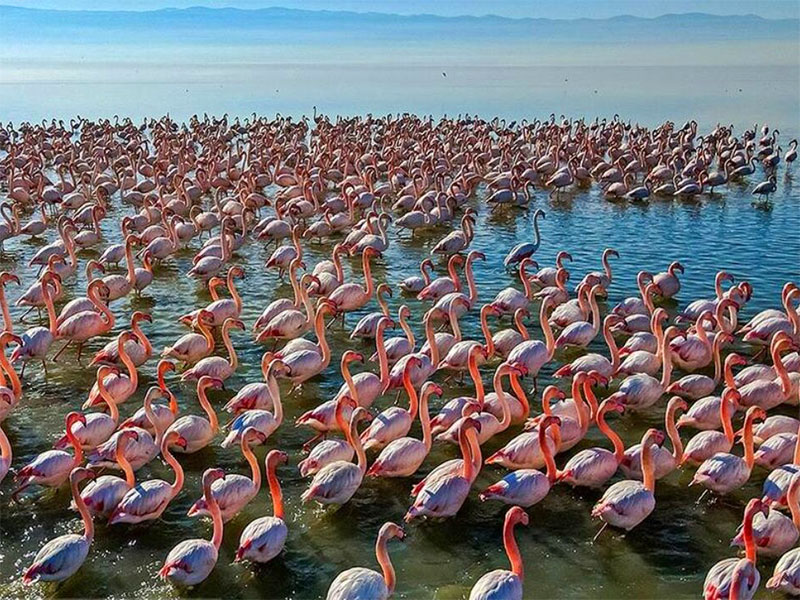
Even though carrying capacity isn’t directly measured in many Iranian papers, the symptoms are obvious.
Nouri et al. (2017) reported that Mazandaran’s coastal zones are already experiencing environmental degradation linked to high tourism demand. Their work on site-selection showed how fragile coastal ecosystems are becoming due to unregulated development.
Tehran Times (2024) documented 3.1 million overnight stays in 10 days, and 19.8 million in one summer season, with all accommodation fully booked. Overflow tourists camped in parks and public areas — a classic sign of surpassing physical and social carrying capacity.
The University of Luxembourg (2024) connected tourism-driven land conversion to:
• habitat destruction
• biodiversity loss
• increased pollution
• deforestation
• altered hydrology (floods, droughts)
In carrying-capacity terms, three limits are being approached simultaneously:
Physical capacity: built environments and natural sites cannot support the peak-season flow.
Environmental capacity: landscapes are being modified faster than ecological systems can regenerate.
Social capacity: local culture, language, and daily life are under stress from external demand.
When all three limits are pressured at once, sustainability becomes increasingly difficult.
3. Governance, Policy Gaps & Weak Stakeholder Coordination
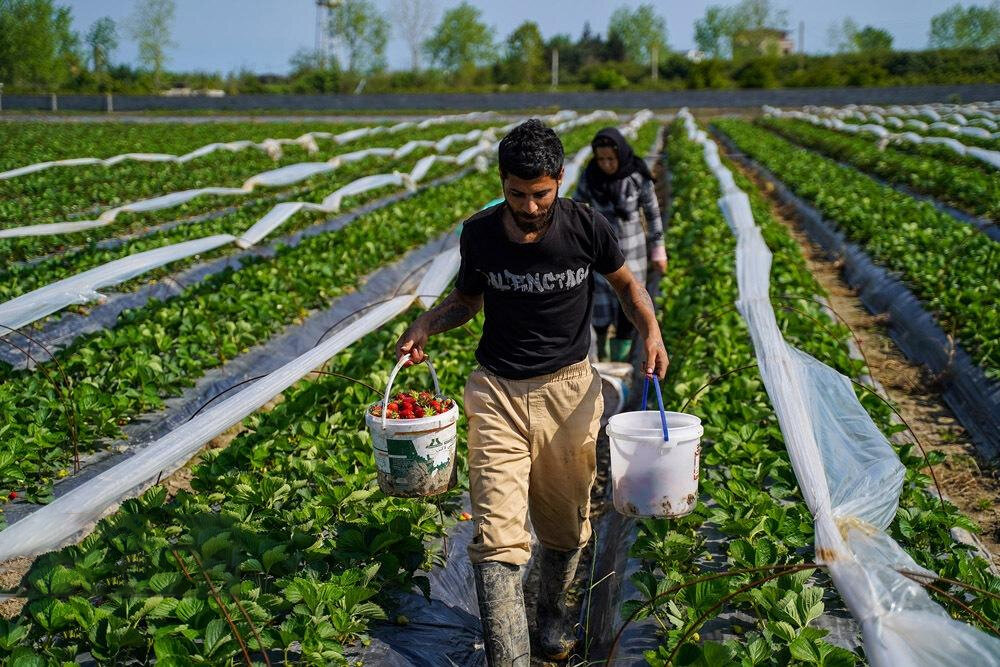
Sustainable tourism depends heavily on planning and governance, and this is where Mazandaran faces some of its biggest challenges.
Solymannejad et al. (2022) found that barriers outweighed facilitators of agritourism development across several dimensions — political/legal, managerial, communication, marketing, education, and participatory structures. This suggests that even though sustainable tourism options exist, institutional obstacles prevent them from succeeding.
Other studies also pointed to issues such as inconsistent land-use rules, slow permit systems, fragmented decision-making, weak marketing and participation, and poor long-term planning (Safarrad et al., 2021; Nouri et al., 2017; Solymannejad et al., 2022; University of Luxembourg, 2024)
These challenges are common in many overtourism cases.
For example:
– In the Canary Islands, governance delays allowed uncontrolled tourism-driven construction (Loftsdóttir & Mixa, 2025).
– Rural Czech regions struggled with second-home pressure due to weak municipal planning (Rajchlová et al., 2025).
– Bhutan avoided overtourism through strict governance (De Wei, 2022).
Mazandaran’s governance system, unlike Bhutan’s or Sagada’s, does not yet have the tools or stakeholder coordination systems required to protect vulnerable landscapes while still supporting tourism income.
4. Comparison with Global Overtourism Cases

Comparing Mazandaran with global overtourism cases helps position its emerging pressures within broader tourism patterns. The point here is not to claim the regions face identical issues, but to identify structural similarities in how destinations respond to rapid visitor growth, weak planning systems, and land-use pressure. The following cases offer useful parallels based on themes rather than one-to-one symptoms.
4.1 Sagada, Philippines (Loverio et al., 2023)
Sagada’s overtourism experience shows what happens when tourism demand rises faster than planning capacity. Their key challenges included overcrowding at sites, unmanaged visitor flows, land-use pressures, and governance gaps. The solution that helped Sagada stabilize some impacts was tight stakeholder coordination through community associations and municipal leadership.
Mazandaran’s literature reveals fragmented decision-making, weak governance structures, and low community participation in tourism planning (Solymannejad et al., 2022). While the specific symptoms differ, the challenge is similar: destinations relying on multiple disconnected actors struggle to manage tourism growth effectively. Sagada’s collaborative model shows a governance strategy Mazandaran currently lacks but could benefit from.
4.2 Canary Islands (Loftsdóttir & Mixa, 2025)
The Canary Islands demonstrate how mass tourism, strong destination branding and easy access reshape local identity and land-use patterns. Media portrayals helped push the islands into a “tourism-first” narrative, creating tension between development and cultural/environmental preservation.
Mazandaran shows a similar trend:
• it is framed as a convenient nature-escape for Tehran residents (Shabahang Parvaz, n.d.)
• massive domestic tourism inflow reshapes land values and identity (University of Luxembourg, 2024)
• rising construction demand transforms agricultural land and forest edges (Safarrad et al., 2021)
The comparison is conceptual: media-driven popularity and economic opportunity lead to rapid transformation. Both regions face the risk of development outpacing long-term sustainability planning.
4.3 Rural Czech Republic (Rajchlová et al., 2025)
The Czech case highlights how rural destinations struggle when rapid tourism growth intersect with:
• seasonal overcrowding
• increased second-home ownership
• landscape modification
• pressure on small community infrastructures
Mazandaran’s studies show strong parallels regarding:
• second homes exceeding 50% of housing in some areas (Safarrad et al., 2021)
• agricultural land repurposed for villas (University of Luxembourg, 2024)
• rural landscapes at risk of fragmentation
Again, the specific pressures differ, but the patterns of rural transformation are similar.
4.4 Bhutan’s Visitor Tax (De Wei, 2022)
Bhutan offers the clearest counter-example. Instead of adapting to overtourism impacts, Bhutan prevents them through a high daily visitor tariff that intentionally caps numbers and shifts the focus to high-value travel.
Mazandaran currently adopts the opposite model — high volume, low restriction, maximum domestic access. This comparison is useful not because the strategies could be instantly replicated, but because it highlights how policy choices can shape tourism trajectories.
4.5 Macao’s Tourist Tax (McCartney, 2020)
Macao uses tourism taxation as a congestion-management tool. This shows that fiscal policy can redirect visitor flows and support infrastructure.
Mazandaran does not employ such tools, but the overcrowding documented by Tehran Times (2024) suggests that similar mechanisms could help reduce seasonal strain in the future.
4.6 What These Comparisons Tell Us
Across these destinations, five structural lessons emerge:
1. Rapid visitation along with weak planning creates long-term sustainability risks.
Mazandaran’s literature clearly reflects this risk across environmental, social, and land-use dimensions.
2. Second-home development is a recurring pattern in overtouristed regions.
Mazandaran mirrors this trend strongly, with >50% second homes in some districts (Safarrad et al., 2021).
3. Strong governance and stakeholder coordination make a measurable difference.
Seen in Sagada; currently limited in Mazandaran.
4. Branding and accessibility accelerate growth beyond carrying capacity.
Seen in the Canary Islands; mirrored in Mazandaran’s proximity to Tehran.
5. Policy tools (taxes, caps, zoning) drastically change outcomes.
Bhutan and Macau show alternative pathways Mazandaran may consider.
These comparisons do not claim Mazandaran has identical problems — only that it shares structural drivers and emerging symptoms consistent with global overtourism literature. This strengthens the understanding of Mazandaran’s trajectory and highlights strategic options for sustainable intervention.
5. Emerging Risks for Mazandaran

Based on the reviewed evidence, the strongest risks forming today include:
1. Loss of Hyrcanian Forest Ecosystems
Tourism-related villa construction, deforestation, and fragmentation threaten a globally significant, ancient ecosystem.
2. Second-Home Dominance
This is a key overtourism warning sign. It can displace residents, inflate land prices, and permanently convert agricultural land.
3. Infrastructure Overload
Roads, water systems, waste facilities, and accommodation capacity are overwhelmed in peak season.
4. Weak Planning Systems
Barriers in governance make sustainable approaches difficult to enforce.
5. Vulnerability to Climate Events
Tourism-driven land changes worsen flood and drought cycles, creating long-term instability.
6. Main Insights
Across all themes, the findings show that:
• Mazandaran is under significant tourism pressure.
• Land-use change is rapid and environmentally damaging.
• Carrying-capacity indicators are already being exceeded.
• Governance structures need strengthening.
• Global overtourism cases offer relatable lessons and warnings.
• Sustainability will require coordinated planning, not just economic demand.
Mazandaran is at an early but very real overtourism threshold. Whether the province stabilizes or slides deeper into unsustainable development largely depends on strengthening planning systems, protecting ecological assets, and improving local stakeholder involvement.