Mazandaran is one of Iran’s most heavily visited and environmentally sensitive regions, receiving huge numbers of domestic tourists every year. After reviewing the literature, three major themes kept coming up consistently across Iranian and international sources:
- tourism pressure and land-use change
- carrying capacity limits and environmental strain
- governance, community involvement, and sustainable tourism planning
Even though most Iranian studies don’t use the term “overtourism,” the patterns described are almost identical to global overtourism cases.
1. Tourism Pressure, Urban Expansion & Land-Use Change
Mazandaran’s landscape has changed drastically alongside rapid tourism growth. Safarrad et al. (2021) show how tourism demand and second-home development reshaped coastal cities like Babolsar and Fereydonkenar over a 30-year period. Built-up areas in tourism zones increased by over 700% from 1987–2019 — an extreme expansion that signals both development pressure and weak land-use control. They also note that in some areas, second homes exceed native homes by more than 50%. In the overtourism literature, this is one of the clearest early warning signs of unsustainable tourism pressure.
The University of Luxembourg (2024) adds another dimension by explaining how rising tourism demand boosts land prices, pushing farmers to sell fields for villa construction. This contributes to deforestation, habitat loss, and damage to Mazandaran’s cultural identity and language. They also highlight increasing floods and droughts caused by environmental degradation — problems directly tied to unplanned development.
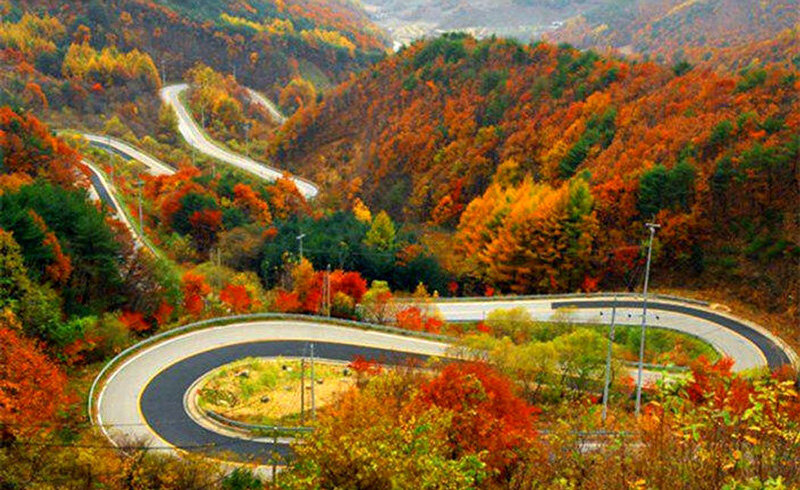
Foundational context from the Iran Chamber Society (n.d.) and Shabahang Parvaz (n.d.) further shows why Mazandaran is so attractive: Caspian coastline, dense Hyrcanian forests, the Alborz Mountains, diverse wildlife, and one of the oldest cultural regions in Iran. This combination makes the province both stunning and extremely vulnerable.
Across all these studies, one thing is obvious: tourism is reshaping Mazandaran faster than regulations or planning systems can handle.
2. Carrying Capacity & Environmental Strain
Multiple sources show that Mazandaran is experiencing pressure far beyond what its environments and infrastructure can hold.
Nouri et al. (2017) found that increased tourism demand in Mazandaran’s coastal areas has already caused environmental degradation, forcing policymakers to search for better site-selection strategies using GIS-based planning tools. Their findings directly point to physical and ecological carrying-capacity limits.
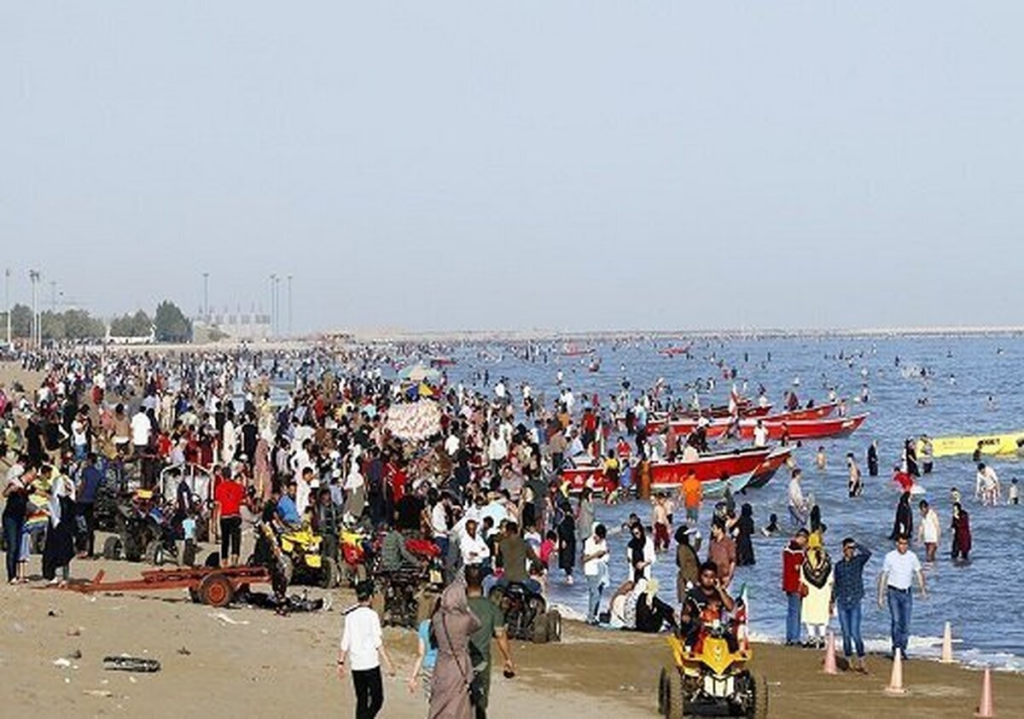
The Tehran Times (2024) pushes the scale even further: 3.1 million overnight stays in ten days, and almost 20 million over the summer season. Accommodation reached full capacity across the province, forcing many visitors to camp in public spaces. No destination can absorb that amount of pressure without consequences. While the report frames it as “success,” the numbers mirror classic overtourism symptoms in places like Barcelona, Santorini, or Thailand’s beach closures.
International comparisons, like Sagada in the Philippines (Loverio et al., 2023), show the same pattern: once visitor numbers exceed environmental and social limits, infrastructure strain and environmental degradation appear first.
Altogether, these sources show that Mazandaran is nearing — or already surpassing — several carrying-capacity thresholds.
3. Governance, Community Participation & Sustainable Development Barriers
A recurring theme is that Mazandaran’s governance systems are struggling to keep up with its tourism growth.
Solymannejad et al. (2022) identified eight major barriers to sustainable agritourism development, including weak political-legal systems, limited management capacity, poor marketing, lack of local education, and minimal community participation. Their conclusion is blunt: barriers outweigh facilitators, making sustainability difficult in the current conditions.
This aligns perfectly with my global overtourism research for this project. For example:
- Sagada only managed its overtourism problems because of strong public–private collaboration (Loverio et al., 2023).
- Macao used taxation to reduce pressure (McCartney, 2020).
- The Czech Republic emphasized rural zoning and strict capacity control (Rajchlová et al., 2025).
- Bhutan applies a strict visitor tax to prevent overuse (De Wei, 2022).
- Jamieson & Jamieson (2019) stress that tourism management succeeds only when municipal authorities enforce planning rules consistently.
In contrast, Mazandaran is portrayed in Iranian sources as a region where tourism grows faster than governance, and development often happens before planning.
Shabahang Parvaz (n.d.) frames Mazandaran mainly as a recreational playground for people from Tehran. This heavy focus on economic benefit, without long-term planning, resembles early stages of overtourism in places like Tenerife or Iceland (Loftsdóttir & Mixa, 2025).
Mazandaran’s growth is strong and the management systems are yet to catch up.
In Summary
Across the entire literature set, three conclusions stand out clearly:
- Tourism numbers in Mazandaran are extremely high and continue to grow. Seasonal peaks are massive and exceed local capacity.
- Environmental stress and rapid land-use change are happening simultaneously. Deforestation, villa construction, farmland loss, and coastal pressure are well-documented.
- Governance and planning systems lag behind development. Weak regulation, limited community involvement, and slow institutional response create barriers to sustainability.
Even if Iranian research avoids the word “overtourism,” the region has most of the global symptoms. And by comparing Mazandaran with destinations like Sagada, Iceland, Bhutan, and the Czech Republic, it becomes easier to see how stronger planning, stakeholder coordination, and carrying-capacity management could help the province move toward more sustainable tourism.