Community-Based Tourism in Petra: The Bedoul Cave Dwellers
Background and Context
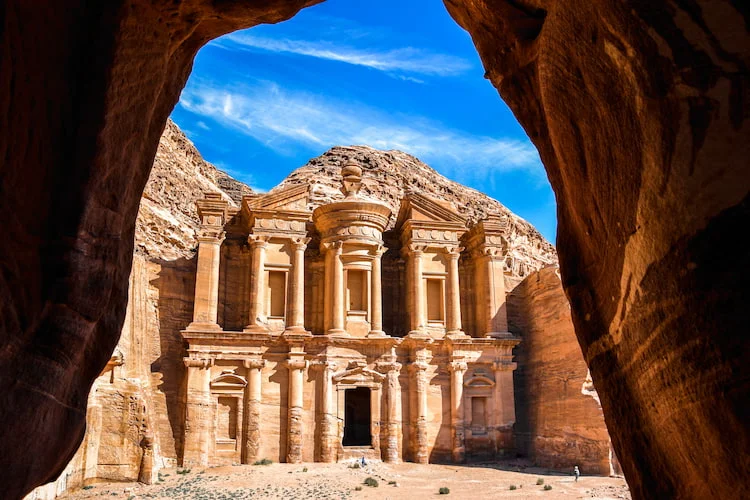
Petra in southern Jordan is one of the most famous archaeological sites in the world, carved into pink sandstone more than two thousand years ago. But beyond its beauty, Petra is also home to the Bedoul (or Bdoul) tribe — the descendants of people who lived in the caves scattered around the valleys and cliffs.
Before tourism arrived, the Bedoul lived semi-nomadically. They raised goats, planted barley and wheat, and guided travelers and pilgrims through the desert (Salameh, personal communication, 2025). As tourism began to grow in the 20th century, they found new ways to earn — guiding archaeologists, selling tea or souvenirs, and offering donkey and camel rides to visitors (Salameh, 2019a; Cultural Survival, 2010).
Over the years, tourism became the only source of income for many families. Children dropped out of school to work with tourists because it brought faster money than education could (Salameh, personal communication, 2025). What began as a side job soon replaced traditional skills and lifestyles.
When UNESCO declared Petra a World Heritage Site in 1985, the Jordanian government decided to move the Bedoul out of the archaeological area for conservation reasons. They built a village called Umm Sayhoun a short distance away. But the plan didn’t work as expected. The houses were too small for extended Bedouin families, and there was no land for herding or crops (Salameh, 2019a). The government promised projects to replace tourism income, but they never really happened. So, families kept returning to Petra every day to work.
Dalal Salameh — a Palestinian politician, activist, and journalist who has written several detailed pieces on Petra and its people — described this failure clearly: the relocation “did not stop their dependence on Petra, because nothing else could replace what they lost” (Salameh, 2022). In other words, they were physically moved but never economically or emotionally separated from the site.