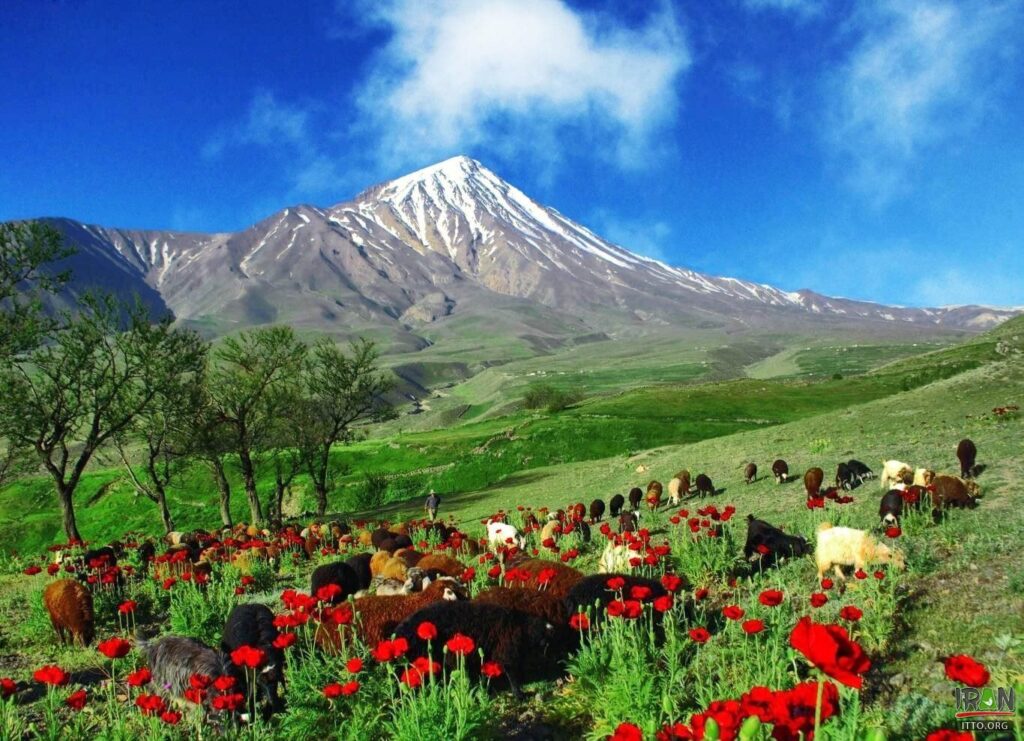
Mazandaran is one of Iran’s most visited provinces and also one of its most environmentally delicate regions. Every year, tens of millions of domestic tourists travel from major cities like Tehran to Mazandaran’s coastlines, forests, and mountain towns. The province is known for its dramatic mix of ecosystems — the Caspian Sea, the Alborz Mountains, dense Hyrcanian forests, rice fields, historic villages, and a strong food culture. These features make Mazandaran incredibly attractive for recreation, but they also make it extremely vulnerable to unplanned development and tourism pressure (Iran Chamber Society, n.d.; Shabahang Parvaz, n.d.).
Over the last three decades, tourism demand has grown quickly, and studies show that it has reshaped Mazandaran’s landscape. Built-up areas in major tourism zones have increased by more than 700%, second homes now dominate some local communities, and agricultural or forest lands are being converted for villas, hotels, and coastal development (Safarrad et al., 2021; University of Luxembourg, 2024). At the same time, peak-season visitation has reached record highs. In 2024, the province recorded 3.1 million overnight stays in under ten days, and nearly 20 million across one season — far beyond what its infrastructure was designed to handle (Tehran Times, 2024).
Even though Iranian research rarely uses the word “overtourism,” the symptoms match what international studies identify as overtourism: overcrowding, environmental degradation, land-use pressure, weak community participation, and fragmented governance (Bisht, 2025; Loverio et al., 2023; Rajchlová et al., 2025). Many of the same challenges appear in global cases like the Czech countryside, the Canary Islands, Sagada in the Philippines, and other destinations where rapid visitor growth exceeded carrying capacity.
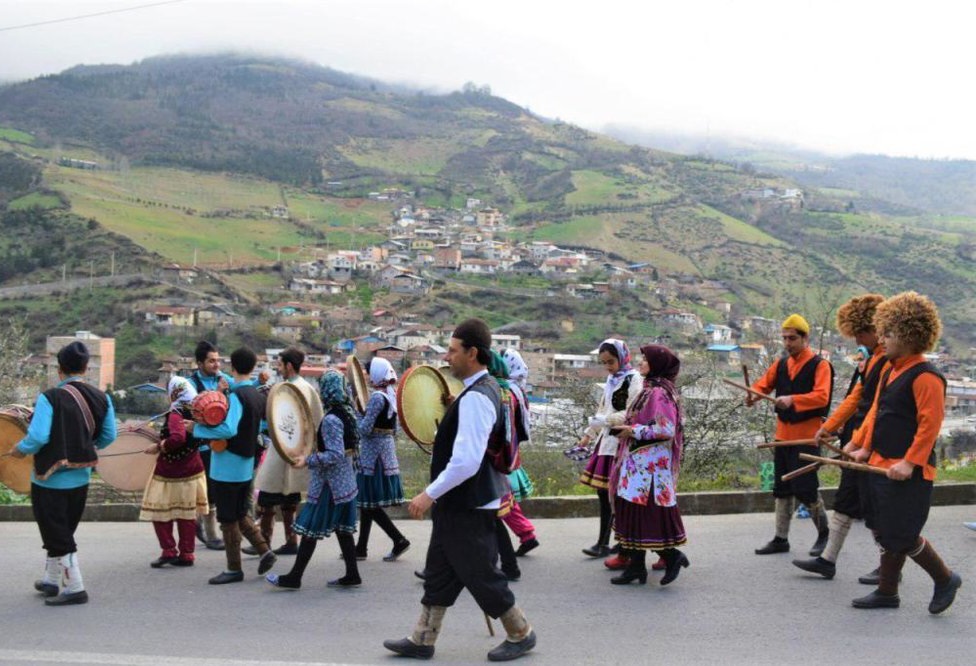
Mazandaran also faces internal sustainability challenges. Studies show that governance systems, planning tools, and community involvement are not strong enough to manage fast tourism growth or protect ecological assets like the Hyrcanian forests (Solymannejad et al., 2022; Nouri et al., 2017). Agritourism potential exists, but barriers — especially legal, managerial, and educational — often outweigh the driving forces for sustainable development.
Because of all this, Mazandaran stands at a crossroads: it is a beloved domestic tourism destination, but it is also experiencing the same pressures that pushed other global destinations into long-term sustainability problems.
This project examines how tourism pressures in Mazandaran interact with carrying-capacity limits, land-use change, and broader sustainable development challenges. It does not evaluate through a single theory. Instead, it pulls from a wide set of studies — both Iranian and international — to understand the patterns emerging in Mazandaran today. By comparing these patterns with global overtourism cases, the project highlights where risks are forming, where governance gaps exist, and why long-term sustainable planning matters for the future of Mazandaran.
One reply on “Introduction”
That’s a beautiful mountain!